
Radio System for Ultracycling
In supported ultracycling, a reliable radio system is far more than just an accessory. It connects rider and support vehicle, makes communication easier during the race and helps the team make clear and timely decisions. Many people only know the complex radio solutions used in professional road cycling, with permanently installed hardware, car antennas and high costs. For most ultra projects, however, that is simply too complicated, too expensive and not practical for everyday use. What is usually needed instead is a simple plug-and-play system that can be set up without major technical effort and still works reliably during the race. The key factors are not only price and ease of use, but also battery life, range, audio quality and weather resistance. Just as important is a headset that feels comfortable, fits under a helmet and does not become a problem after many hours in the saddle. That is exactly what this page is about.


Requirements for the Radio System
A radio system in ultracycling above all has to match the reality of a supported race. Unlike professional road cycling, the goal is usually not to use a fully built-out technical setup with fixed antennas and major installation work. Systems like that are expensive, inflexible and simply too much for many ultra projects. In practice, the most useful solutions are usually the ones that are quick to set up, remain affordable and work without modifying the vehicle. Good value for money is therefore a key factor. The system should make race operations easier for the team instead of creating new complications. At the same time, it has to be robust enough to work reliably for many hours or even days. Anyone choosing a radio system for ultracycling should therefore not focus only on individual specifications, but always look at the full setup: rider, support vehicle, weather, charging infrastructure and the real purpose of communication during the race.
Battery Life
Ultra cycling races often last much longer than a single day, and some projects continue for several nights. For that reason, battery life is one of the most important aspects of any radio system. In practice, it is not enough to rely only on the manufacturer’s figures. What matters is how the system is actually used during the race and how well battery changes are organized. Many teams therefore work with two or four devices that can be swapped in pairs and charged in parallel inside the car. This keeps communication stable even when a unit runs low or has to be changed at short notice. To make that work, the support vehicle needs a clear charging setup with fixed routines. Cables, charging points and responsibilities should all be sorted out before the race begins. Especially when dealing with sleep deprivation and long shifts, a well-organized charging concept saves a lot of stress and prevents unnecessary failures.
Weather Resistance
An ultra cycling race often passes through very different conditions. During the day there may be intense heat, at night it can get cold, and on top of that there is sweat, rain, spray and long periods of use without any real break. A radio system therefore needs to be weather-resistant and practical in everyday race conditions. That applies not only to the device itself, but also to cables, connectors and the headset. The headset in particular is constantly moving during the race, sits close to the skin and helmet and is therefore especially exposed. If moisture, wind or mechanical stress cause problems there, communication as a whole starts to suffer. A robust setup is therefore more important than a long list of extra features. In ultracycling, what matters is not how impressive a system looks on paper, but whether it still works reliably after many hours of use.
Audio Quality
Audio quality is one of the most important factors in the race. Older or impractical systems often rely on a push-to-talk button. That means the rider has to keep taking one hand off the bars to speak. Especially when tired, during descents or in difficult conditions, that is far from ideal. A good radio system should therefore feel as natural as possible and allow conversations much like the ones you would have sitting next to each other in the car. The team needs to hear how the rider is feeling, and the rider has to understand instructions or questions clearly. This becomes especially demanding at higher speeds, in strong wind and under long periods of physical stress. Once the audio quality starts to break down, the system quickly loses its value. Clear communication is therefore not just a comfort feature, but a real requirement for meaningful teamwork during the race.
Navigation
Many people first associate radio communication in ultracycling with navigation. In practice, however, its main value often lies elsewhere. The radio system is primarily used to coordinate strategy, assess the rider’s condition and make decisions during the race. It is about topics such as sleep, nutrition, bike changes, pace or the next tasks for the team. The support vehicle is also not permanently right behind the rider, which means navigation should ideally work independently anyway. Of course, radio communication can still help with short-term directions or changes on the road. But in most cases, its main purpose is not route guidance. Its real strength lies in the link between rider and crew. That is where it creates the greatest value during the race: through fast, clear and reliable coordination about everything that matters on the road.
The CEECOACH devices are easy to use, and that is what makes them so good. You just talk into them, and the great thing is that the batteries last a long time. Even the least technical person understands how to use them.


Experience from Practice
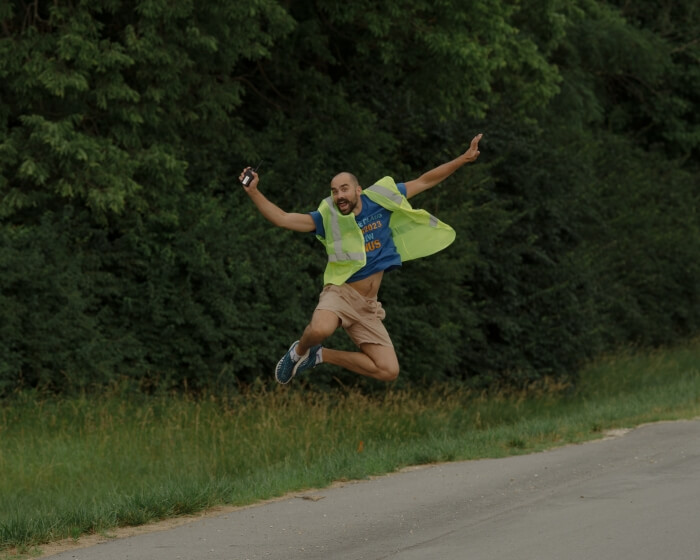
In ultra cycling, radio communication is not just a technical aid, but an important part of the entire race process. This becomes especially clear when it comes to the mental side of racing. Anyone spending many hours or even days in the saddle, dealing with sleep deprivation, heat, cold and physical strain, benefits enormously from staying in contact with the team. On the one hand, the conversation helps keep the rider awake, calm and responsive. On the other hand, it continuously gives the team inside the car important information: what the mood is like, how well nutrition is being tolerated, how strong the fatigue is and whether a power nap or clothing change may soon be needed. That allows decisions to be prepared before a problem becomes serious. At the same time, communication also makes a race feel more human. Stories, small conversations and a good tone within the team can make a real difference in difficult phases. That is why it makes sense to think about the radio setup not only from a technical perspective, but also in terms of mental support, atmosphere and teamwork.
Leukosilk Tape
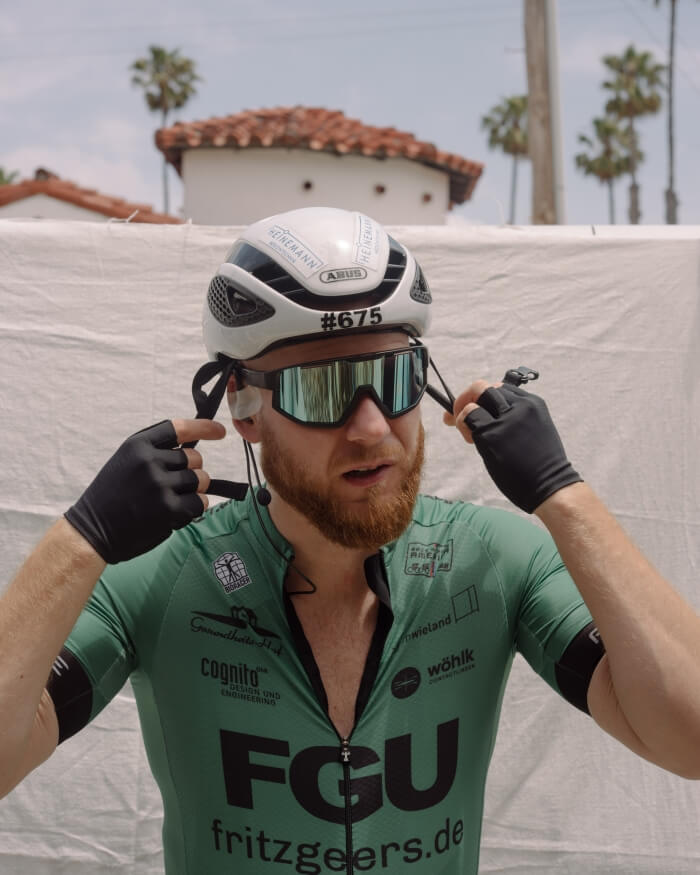
One small but very effective practical tip is Leukosilk tape. During long races, an earpiece can slip, get in the way when putting on the helmet or simply become uncomfortable over time. With a bit of tape, the headset can be fixed neatly to the ear so it stays in place better despite movement, sweat and repeated helmet changes. It is important not only that the rider knows how it works. The team should also have seen and practiced the process once, so there is no unnecessary stress during the race. There are solutions without a classic headset, but they often come with other disadvantages. They fit less well under the helmet or make switching between different helmets unnecessarily complicated. Anyone who wants to alternate between a well-ventilated helmet and a more aerodynamic model depending on weather or terrain will often be more flexible with a simple headset plus tape.
Time Trial Helmet
The time trial helmet quickly shows why a slim setup matters. Many devices cannot realistically be worn directly on the head because there is simply too little space under a time trial helmet. In practice, it has therefore proven useful to carry the radio unit in the jersey pocket and run the cable up from there to the head. That keeps the area under the helmet free and allows the rider to switch between different helmets without rebuilding the whole system. Whether a time trial helmet is really the best choice in ultracycling is something each rider has to decide individually. Depending on the route, temperature and duration of the race, a more open helmet may also have advantages. The important thing is that the radio system should not make the helmet a problem. The setup should adapt to the race, not the other way around.
A Few Rules to Keep in Mind
For all the focus on technology, the rules of the specific race should never be ignored. Especially in supported events, there are often clear regulations about how communication may be used during the race and how a headset may be worn. In many rulebooks, the headset is only allowed on the right side so that the left ear remains free to hear traffic. Details like that may seem minor beforehand, but they can be decisive during the race. That is why the whole setup should not only be tested in training, but also checked for compliance with the rules. This affects the position of the headset, the type of communication and the way the system is used in road traffic. In ultracycling, good preparation always means thinking through these points early on as well.
Radio System for Ultracycling
Anyone looking for a simple, practical and affordable radio solution for supported ultracycling will find that CEECOACH is a system that has proven itself many times in real racing conditions.


Product Recommendation (CEECOACH)
From practical experience, CEECOACH has proven to be a very useful solution for ultracycling. The system originally comes from equestrian sports, but it also transfers very well to the requirements of a supported ultra cycling race. What stands out most are the simple handling, the clear audio quality and the flexibility to adapt the setup to the team and the specific area of use. Especially for teams that do not need a highly complex professional system, but are looking for a simple, reliable and affordable solution, this is a major advantage. At the same time, an honest recommendation also means speaking openly about its limits. CEECOACH is not a solution for every possible distance between rider and support vehicle, but rather a system with a clear focus on strong audio quality at close range. If this strength is used in the right way and the team’s processes are well organized, it becomes a very practical communication setup for ultra cycling races, as shown in real-world use at events such as Race Across America, Race Across Germany and others.
Range
Range is the point that should be addressed fairly and openly when talking about CEECOACH. The system is based on Bluetooth technology and stands out mainly because of its strong audio quality. The possible distance between rider and support vehicle is therefore limited. In practice, it is more realistic to expect around 100 metres, and under very good conditions up to 250 metres may sometimes be possible. Beyond that, communication usually ends. For many situations in supported ultracycling, this is completely sufficient as long as the team understands how to use the system and does not start the race with unrealistic expectations. Anyone looking primarily for a communication solution over greater distances will need to consider other options. But for those who mainly want clean, direct and uncomplicated communication at closer range, this is a strong product.
Headset
One major advantage of the system is that different headsets can be connected. This makes it possible to tailor the setup to both rider and team. Inside the support vehicle, a comfortable gaming headset with a standard audio jack has proven useful because it sits well, offers good sound quality and keeps both hands free. For the rider, the more important point is that the headset should be tested thoroughly in training. Even small pressure points can become uncomfortable or even painful after many hours in the saddle. The headset should also be weather-resistant and work properly under the helmet. In the end, what matters in the race is not only whether a headset is technically compatible, but whether it can be worn comfortably over a long period of time. That is exactly why it makes sense to test different options early and not start improvising during the event itself.
Mute Mode
One feature that is especially appreciated in real use is the mute mode inside the car. The team can coordinate internally without the rider hearing every single conversation. At the same time, the connection to the athlete remains active, so important information can still be passed on immediately. In long and mentally demanding races, this is a real advantage. Not every discussion inside the car needs to reach the rider directly. Sometimes it is better for the crew to talk through a situation internally before involving the athlete. That creates calm, keeps communication clear and can help remove unnecessary stress from the race. In practice, this is less of a technical extra and more of a meaningful building block for good teamwork.
Windscreen
One often underestimated detail is the windscreen on the microphone. On the bike in particular, headwind, crosswind and changing weather conditions can reduce intelligibility significantly. A small windscreen often improves audio quality noticeably and is therefore, from experience, an important part of a clean setup. Depending on the headset, it may also make sense to secure the windscreen additionally so that it stays in place reliably during long periods of use. Together with a well-fitting headset and clean cable routing, this creates a system that does not only work on paper, but actually helps in the reality of racing. As with many things in ultracycling, it is often the small details that make the biggest difference in the end.